

Standing Witness to the American Story
As America marks its 250th anniversary, the landscapes of Sequoia and Kings Canyon have been keeping a much longer view. They were here long before the nation began, and they have witnessed the people, ideas, and traditions that have shaped it ever since. This week, we’re sharing some of the stories these remarkable places hold. We hope you’ll come away with a renewed sense of stewardship, a spark of adventure, and the inspiration to share these stories so that even more people can connect with these treasured parks as you have.
Give 250 for the Next 250
As America marks 250 years, help protect the parks that have witnessed so much of our nation’s story. Give $2.50, $25, or $250, or become a sustaining donor with a gift of $50 a month for the next five months. Every gift, at every level, supports the science, stewardship, education, and conservation that will help ensure Sequoia and Kings Canyon endure for the next 250 years and beyond.

Older Than the Nation
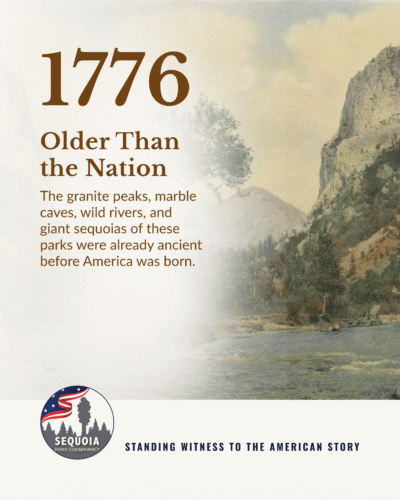
The granite peaks, marble caves, wild rivers and giant sequoias of these parks were already ancient before America was born.
Older Than the Nation
Before there was a United States, there was this land. The granite peaks of the High Sierra, the deep folds of Kings Canyon, and the giant sequoia groves were already ancient when the nation was born. The General Sherman Tree, the largest living tree on Earth, has stood for more than two thousand years. When the Declaration of Independence was signed in 1776, this tree had already been growing for over fifteen centuries. These lands do not measure time in decades. They measure it in millennia. And these mountains were never empty. People have lived in the southern Sierra for thousands of years, and their descendants are here still, a reminder that some of the most American places of all were here long before America.
Featured Books:
Archeology in the Southern Sierra Nevada: American Indians of Sequoia and Kings Canyon National Parks
The Sierra Nevada Before History
America's First Park for a Living Thing
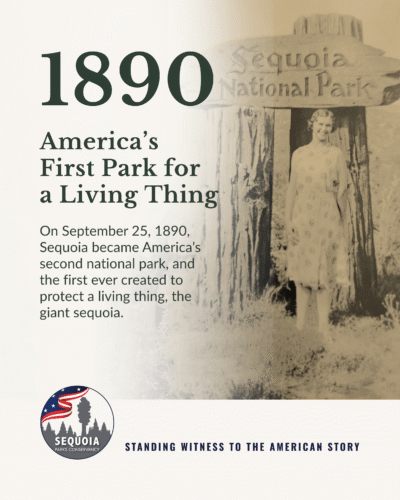
On September 25, 1890, Sequoia became America’s second national park, and the first ever created to protect a living thing, the giant sequoia.
America's First Park for a Living Thing
By the late 1800s, the giant sequoias were in danger. Loggers had moved into the Sierra, and trees that had stood for thousands of years were being cut for timber and shingles. Some of the largest living things on Earth could have vanished in a single generation. So the country made a choice. On September 25, 1890, President Benjamin Harrison signed the act that created Sequoia National Park, the first national park ever created to protect a living thing, the giant sequoia. It was a decision to value these trees not for what they could be turned into, but for what they were, and to keep them standing for everyone, and for all the generations still to come.
Featured Books:
Images of America: Sequoia National Park
Images of America: Kings Canyon National Park
The Soldiers who Stayed
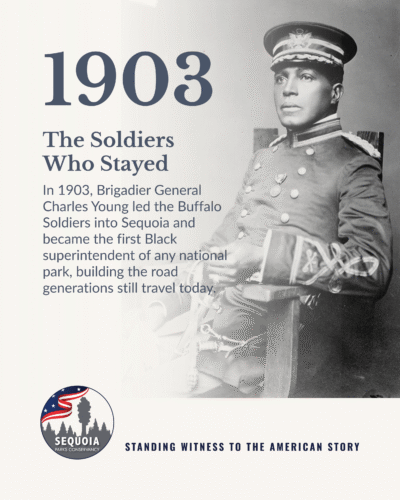
In 1903, Brigadier General Charles Young led the Buffalo Soldiers into Sequoia and became the first Black superintendent of any national park, building the road generations still travel today.
The Soldiers who Stayed
In the summer of 1903, Brigadier General Charles Young led a company of the 9th Cavalry, the Buffalo Soldiers, into these mountains. Before the National Park Service existed, the U.S. Army protected the early national parks, and that year the task fell to Young and his men. Young, the third Black graduate of West Point, became the first Black superintendent of any national park. Under his command, the soldiers built the first wagon road into the Giant Forest, a route generations of visitors have traveled ever since. He is even credited with the park’s first act of conservation, fencing the roots of vulnerable trees so they could outlast every one of us, and he named one giant the Booker T. Washington Tree. The story of Brigadier General Charles Young and the Buffalo Soldiers is written into the ground you walk.
Featured Book:
Black Officer in a Buffalo Soldier Regiment
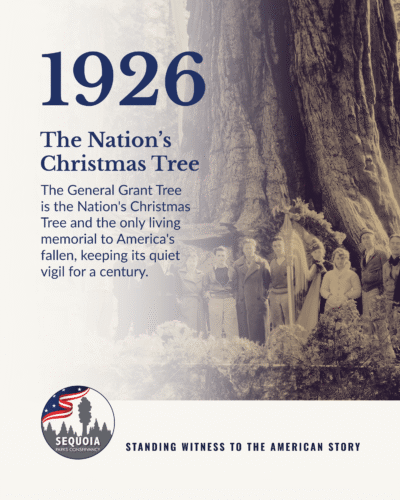
The Nation's Christmas Tree
The General Grant Tree is the Nation's Christmas Tree and the only living memorial to America's fallen, keeping its quiet vigil for a century.
The Nation's Christmas Tree
In Grant Grove stands a sequoia with a singular place in American life. In 1926, President Calvin Coolidge named the General Grant Tree the Nation’s Christmas Tree. Thirty years later, President Eisenhower went further, declaring it a National Shrine, a living memorial to the men and women who have died in service to the country. It remains the only living thing ever given that honor. Every December for a hundred years, a wreath has been laid at its base to remember the fallen, a tradition unbroken even through the Second World War, when a single ranger walked to the tree to place it. As the nation turns 250, the General Grant Tree still stands, still grows, and still keeps its quiet vigil over a country it has watched for centuries.
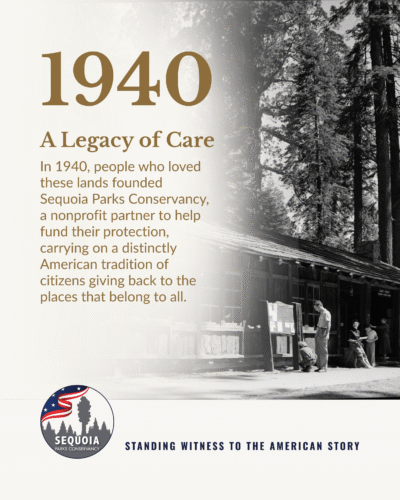
A Legacy of Care
In 1940, people who loved these lands founded Sequoia Parks Conservancy, a nonprofit partner to help fund their protection, carrying on a distinctly American tradition of citizens giving back to the parks that belong to all.
A Legacy of Care
The American story is not told only by soldiers and presidents. It is told by ordinary people who love a place and decide to do something about it. In 1940, a group of people who loved these mountains did exactly that. They founded what was first called the Sequoia Natural History Association, known today as Sequoia Parks Conservancy, joining a long, quiet American tradition of citizens who organize to protect the parks that belong to all of us.
The National Park Service protects and manages these lands. Partners like Sequoia Parks Conservancy help fund and make that work possible: raising money, publishing field guides, and backing the programs that connect people to these places. It is one of the most American things there is. When you care about something that belongs to everyone, you find a way to give back to it.
What started as a small operation selling $530 worth of books has grown into an organization that has provided millions of dollars in support to Sequoia and Kings Canyon National Parks.
Every generation has had its stewards. Now the story turns to us.
Did you know? Sequoia Parks Conservancy has an educational arm that provides guided tours throughout the parks and operates Crystal Cave tours for the National Park Service. All proceeds from tour tickets go back into the parks. Book your tour today!
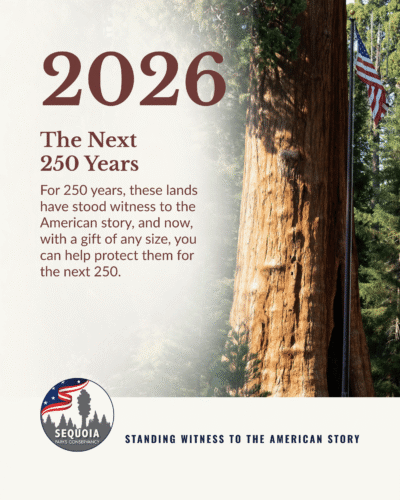
The Next 250 Years
For 250 years, these lands have stood witness to the American story, and now, with a gift of any size, you can help protect them for the next 250.
The Next 250 Years
For 250 years, these lands have stood witness to the American story. Today, the story turns to us. America’s best idea did not protect itself, and it will not carry into the next 250 years on its own. It depends on people who choose to stand witness and to act. This Independence Day, you can join that effort. A gift of any size, from $2.50 to $250, helps fund the stewardship that keeps Sequoia and Kings Canyon thriving for the generations who will stand here long after us. No amount is too small. Every dollar helps ensure these parks remain a living part of our nation’s history for the next 250 years. Stand witness with us.
Experience the Parks
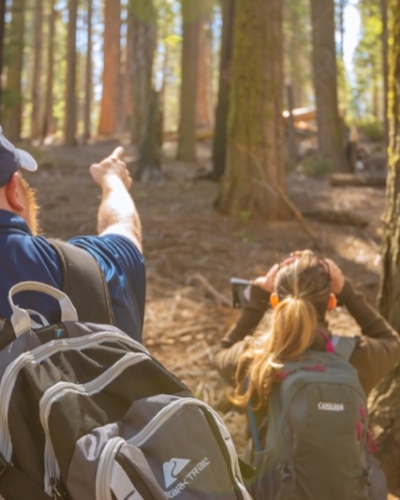
Join the Sequoia Parks Conservancy Field Institute on a private Sequoia Adventure, Crystal Cave tour, Astronomy Program or Sequoia Guided Hike to learn more about the history of Sequoia and Kings Canyon National Parks.
Experience the Parks
Shop Park History
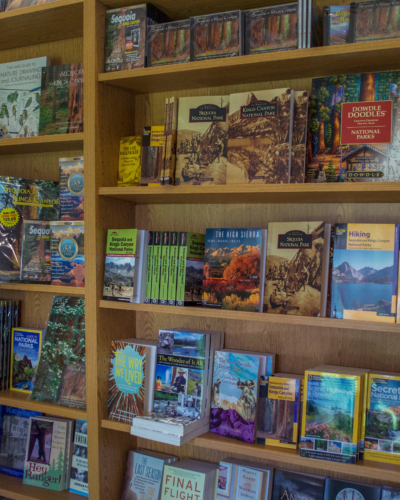
Shop the Sequoia Parks Conservancy park stores online for books on the people, places, and history of Sequoia and Kings Canyon National Parks, where every purchase helps support the parks you love.
Shop Park History

Give $250 for the Next 250
As America marks 250 years, help protect the parks that have witnessed so much of its story. Give $2.50, $25, or $250, or become a recurring donor at $50 a month for the next five months. Every gift, at every level, helps fund the science, stewardship, and programs that will carry Sequoia and Kings Canyon into the next 250 years.