The Tale of Two Newts
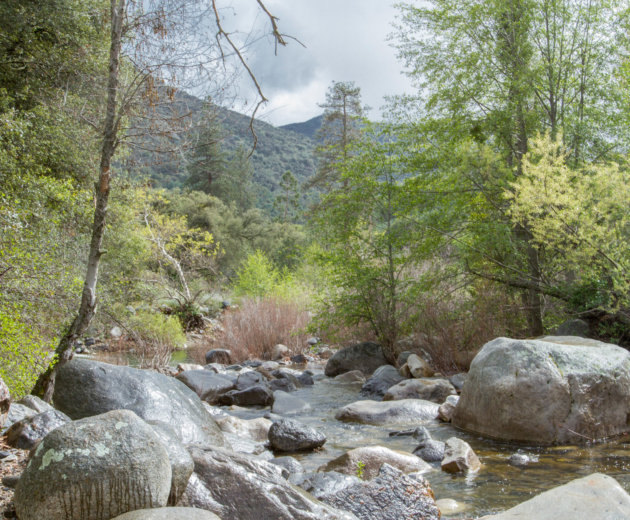
The Kaweah River area holds a small but fascinating story about the wildlife of Sequoia and Kings Canyon National Parks. Here, the ranges of two closely related species meet: the Sierra newt, generally found to the north, and the California newt, generally found to the south. Researchers studying their genetics have identified a hybrid zone around the river, where the two species interbreed.
These small amphibians offer a closer look at how wildlife, water, and place are connected.
Scientific Name: Taricha torosa
Common Name: California Newt, Coastal Newt, Orange Bellied Newt
Specific Sierra Subspecies: Taricha torosa sierrae or Sierra Newt
Both species are native only to California. Older references may list the Sierra newt as Taricha torosa sierrae, but it is now recognized as a separate species.
A Life Between Land and Water
Newts are salamanders whose lives connect terrestrial shelter with aquatic breeding habitat. Much of their time on land is spent in protected places, including beneath logs, among fallen leaves, and in crevices or burrows.
Wet weather brings more opportunities to see them moving through the landscape. Adults travel to breeding waters, where females attach jellylike egg clusters to submerged surfaces. The young hatch as aquatic larvae with external gills before eventually developing the features they need for life on land. The timing varies with species and local conditions.
Small Animals, Important Defenses
Their brown backs help newts blend into their surroundings, while their yellow-to-orange undersides carry a different message. When threatened, they may arch their bodies to expose those bright colors as a warning.
Both species possess tetrodotoxin, a powerful toxin that helps defend them against predators. Enjoy watching newts without picking them up, and keep pets from approaching or mouthing them.
What’s on the Menu?
Newts feed on small invertebrates, including worms, insects, snails, and slugs. Their feeding connects them to the many small organisms living in damp soil, leaf litter, and freshwater habitats.
Watch Your Step
A rainy-day walk can reveal wildlife that is easy to overlook in dry weather. Watch for newts crossing trails, give them space, and leave logs, rocks, and streamside vegetation undisturbed.
Protecting their shelter and breeding waters helps care for an often-unseen part of the parks’ ecosystem.
Sources: National Park Service, Amphibians and Fish of Sequoia and Kings Canyon National Parks and California Newt; American Museum of Natural History, Amphibian Species of the World, Sierra Newt and California Newt; and Shawn Kuchta’s 2007 research on the Kaweah River hybrid zone.
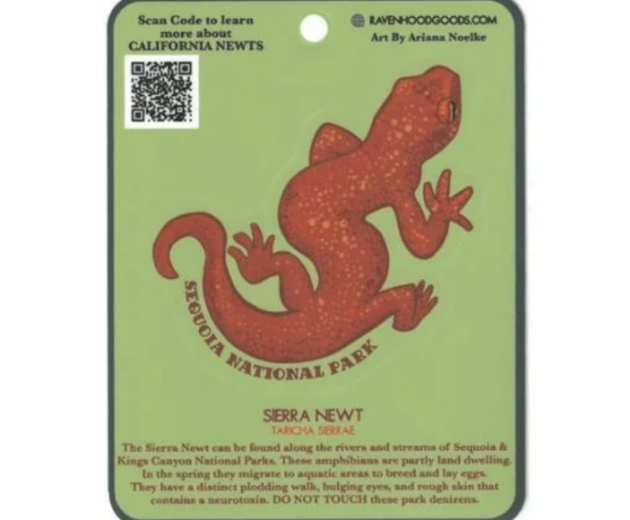
Shop our Newt Sticker!
Get to know one of the parks’ smaller residents with our new Sierra newt sticker. Featuring this California native, it’s a reminder of the wildlife worth looking closely for. Your purchase supports Sequoia Parks Conservancy’s work in Sequoia and Kings Canyon National Parks.
Explore the Foothills with Us
Take a closer look at life in the foothills with Sequoia Parks Conservancy’s Field Institute. Join a guided foothills hike or arrange private guiding for your group to discover the wildlife and habitats along the trail. During wet weather, you might catch a glimpse of a newt moving through its habitat, offering a small window into the landscape’s many connections.